How Do You Prepare Your Electrical Panel And Home Before Solar Installation Day?
The smoothest installations are decided weeks before the crew arrives. Here is how to handle panel capacity, site access, utility paperwork, and the handoff so your system is energized without surprises.
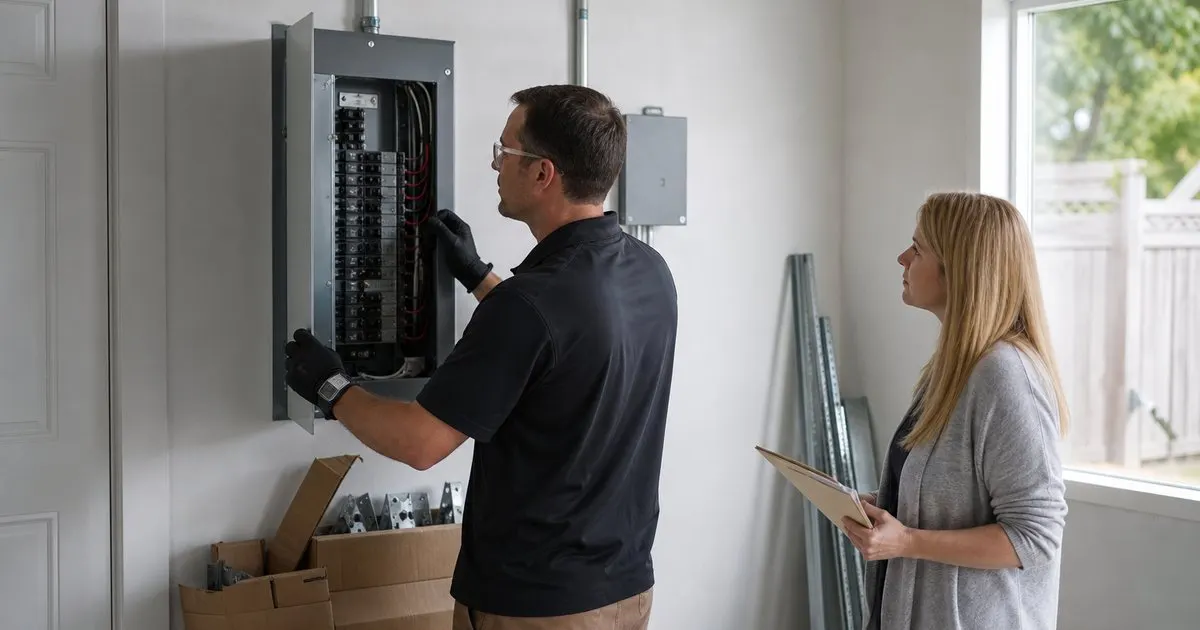
Understanding the panel capacity question
Your main electrical panel is where the solar system meets the house, and its ratings determine how the connection can be made. The two figures that matter are the busbar rating, which is the capacity of the metal bars that distribute power inside the panel, and the main breaker rating. Electrical code limits how much backfed solar current a busbar may accept in addition to the utility feed, a constraint installers often refer to as the 120 percent rule. When the proposed array exceeds that allowance, the installer has a few options, and each has a cost and a consequence. Related: How Do You Compare Home Solar Quotes On Substance, Not Salesmanship?
The simplest fix is sometimes to reduce the main breaker to a lower rating, which frees up busbar capacity but limits how much the house can draw from the grid at once. Another is a line-side connection ahead of the main breaker, which sidesteps the busbar limit but requires a suitable enclosure and utility approval. The third is a full panel upgrade, which is the most expensive but also the most future-proof, especially for a home planning a battery, a heat pump, or vehicle charging. Ask the installer to explain which approach the design uses and why, and to show you the calculation.
Keep reading: How Do You Compare Home Solar Quotes On Substance, Not Salesmanship?, What Panel Qualities Actually Determine Your Solar System's Lifetime Output?, Which Inverter Design Best Suits A Complex Or Partly Shaded Roof?. See how Solarholm helps you the homeowner guide to premium solar and home batteries.
Clearing the site and the attic
The crew needs unobstructed access to three places: the roof, the electrical panel, and the path between them. Move vehicles out of the driveway so ladders and racks can be staged, and clear the area around the main panel and any wall where the inverter or battery will hang. If conduit will run through the attic, clear a path to the access hatch and remove stored items near where the crew will work. Installers regularly lose an hour on installation day to a garage full of boxes, and that hour comes out of the care given to your roof. Related: Which Inverter Design Best Suits A Complex Or Partly Shaded Roof?
Think ahead about trees, pets, and neighbors. Branches that shade the array or hang over the work area should be trimmed before the crew arrives, since installers typically do not trim trees. Dogs should be kept indoors and away from open gates. Let neighbors know that a crew and a lift or truck will be present for a day or two, and confirm where the crew may park. If your home has a security system with roof or attic sensors, tell the installer, and if you have a tile or slate roof, ask what the crew will do to prevent breakage and how spares are handled.
Utility and permit paperwork you should watch
Two approvals gate your system, and neither is under the installer's full control. The building permit is issued by your local jurisdiction and inspected after installation. The interconnection agreement comes from your utility and is followed, after inspection, by permission to operate, often abbreviated as PTO. Until PTO arrives, the system must remain off, no matter how finished it looks on the roof. Timelines vary from days to months depending on the utility, so ask the installer for a realistic estimate for your area and for confirmation that the interconnection application has actually been submitted.
If your home sits in a community with an architectural review board or homeowners association, submit the application early, because approvals can take a full meeting cycle. Many states limit how far an association can restrict solar, but the process still has to be followed. Keep copies of every submission, and ask the installer to notify you when the permit is issued and when inspection is scheduled. Being present for the inspection is not required, but it is instructive, and an inspector's questions often reveal how carefully the work was done.
Setting up for a clean handoff
Before the crew leaves, walk the installation with the lead installer. Ask them to point out the main solar disconnect, the rapid shutdown initiator, the inverter status indicators, and any battery controls, and have them demonstrate the shutdown procedure once so you can repeat it in an emergency. Photograph the labels, the panel schedule, and the inverter nameplate. Confirm that the monitoring gateway is connected to your network and that the account is in your name, not the installer's, so you retain access if the relationship ends. Related: What Panel Qualities Actually Determine Your Solar System's Lifetime Output?
Assemble a single folder, physical or digital, containing the contract, the itemized equipment list, the permit, the inspection sign-off, the interconnection agreement, the PTO letter, all warranty registrations, and the installer's pre-cover photographs of the roof penetrations. Note the date the system was energized and the first monitoring reading. This folder is the foundation for any future warranty claim, for a smooth resale, and for any dispute over production. The homeowners who handle solar most gracefully are simply the ones who kept the paperwork. Related: Why Do Two Solar Quotes For One Roof Differ So Greatly?
- The busbar and main breaker ratings decide whether the installer can backfeed the array directly, derate the main, use a line-side tap, or upgrade the panel.
- Clear the driveway, the panel area, and the attic path before installation day, and trim shading branches yourself in advance.
- The system cannot be switched on until the utility grants permission to operate, so track the permit and interconnection submissions personally.
- Walk the finished installation, learn the shutdown procedure, put the monitoring account in your own name, and keep every document in one folder.

Julien Jimenez
Julien Jimenez is an independent software builder based in Paris. He designs, ships, and operates focused SaaS products for small businesses and independent professionals. Read the full author page.
Power That Works For Decades
The homeowner guide to premium solar and home batteries. Solarholm is built to help you put this into practice.
Get a solar planMore from the Solarholm blog
How Do You Compare Home Solar Quotes On Substance, Not Salesmanship?
What Panel Qualities Actually Determine Your Solar System's Lifetime Output?
Which Inverter Design Best Suits A Complex Or Partly Shaded Roof?
Get the complete home solar and storage guide
Our full buying guide, the price guide, and new research as we publish it. One email, no spam, unsubscribe any time.