Does A Premium Home Solar System Need Professional Maintenance Every Year?
Solar is often sold as maintenance-free, which is nearly true and slightly misleading. Here is what a well-built system actually asks of its owner, when cleaning helps, and when a professional inspection earns its fee.
What a solar system actually asks of you
A rooftop array has no moving parts, no filters, and no fluids, and a well-installed one can run for years without anyone touching it. That is the honest basis for the maintenance-free claim. What the claim leaves out is that a system can also quietly underperform for months if nobody is paying attention, because a tripped breaker, an offline string, or a failing optimizer makes no noise. The most valuable maintenance habit costs nothing: open the monitoring app at least monthly, compare production with the same month last year and with the weather, and look for panels or strings that have gone quiet. Related: How Do You Compare Home Solar Quotes On Substance, Not Salesmanship?
A few visual checks from the ground complete the routine. Look for debris accumulation along the lower edge of the array, for nesting birds or squirrels beneath the panels, for vines or branches growing toward the roof, and for anything hanging loose. Listen for the inverter's cooling fan and glance at its status light if it is accessible. Batteries add a small list of their own: keep the enclosure area clear and ventilated, and note any alerts the app raises. None of this requires a ladder, and together it catches the majority of problems while they are still small. Related: Which Inverter Design Best Suits A Complex Or Partly Shaded Roof?
Keep reading: How Do You Compare Home Solar Quotes On Substance, Not Salesmanship?, What Panel Qualities Actually Determine Your Solar System's Lifetime Output?, Which Inverter Design Best Suits A Complex Or Partly Shaded Roof?. See how Solarholm helps you the homeowner guide to premium solar and home batteries.
Cleaning: when it helps and when it does not
In most climates rain does the cleaning, and washing panels that receive regular rainfall rarely produces a measurable gain. The exceptions are real, though. Arrays in dry regions with long rainless stretches, homes near agricultural fields or unpaved roads, low-tilt installations where water sheds slowly, and roofs under trees that drop sap, pollen, or heavy bird traffic can all accumulate enough grime to justify a wash. The tell is in the monitoring: a gradual decline that recovers sharply after a heavy rain is soiling, and it tells you how much cleaning would have recovered.
If you do clean, do it safely and gently. Early morning or evening on a cool panel avoids thermal shock. Use plain water and a soft brush or squeegee on a pole, and avoid pressure washers, abrasive pads, and harsh detergents, all of which can damage the anti-reflective coating or the seals and may void the product warranty. For anything beyond a single-story roof reachable from the ground, hire a service that carries insurance and uses proper fall protection. The gain from cleaning is modest, and it is never worth a fall.
The periodic professional inspection
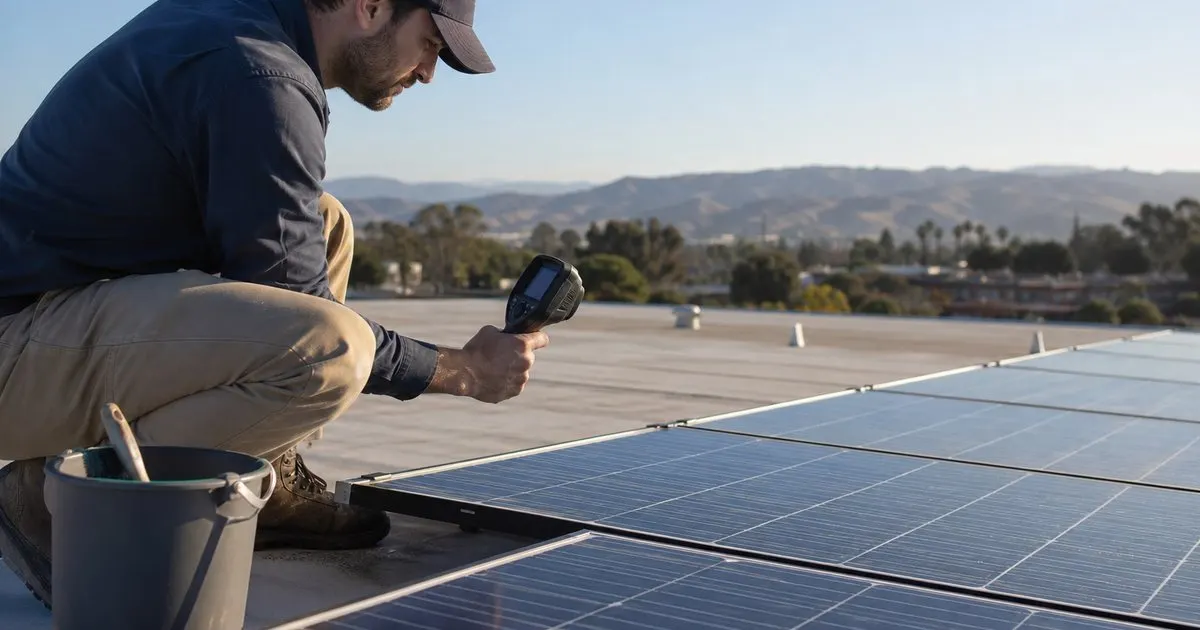
An annual professional visit is more than most residential systems need, but a periodic one, every few years or after a severe weather event, is sensible on a premium installation. A qualified technician will check the torque on mounting hardware, inspect flashing and sealant at every penetration, examine connectors for heat discoloration, verify grounding, and confirm that conduit and junction boxes have stayed sealed. Many use a thermal camera to find hot spots in modules or connections that are invisible to the eye, and some perform electrical tests that reveal strings drifting from their expected values.
The inverter and any battery deserve their own checks. String inverters have fans and capacitors that age, and firmware that manufacturers update; a technician can confirm both. Batteries can be evaluated for capacity retention, cell balance, and enclosure condition, and their software checked for the operating mode you intended. Ask for a written report with photographs, because the value of an inspection is partly in the record it creates for future warranty claims and for resale. After hail, high wind, or a nearby wildfire, an inspection should be scheduled regardless of when the last one occurred.
Service plans and what they are worth
Many installers offer service plans that bundle monitoring oversight, periodic inspections, cleaning, and priority response for a recurring fee. Whether one is worth it depends on what it includes and what you would otherwise do. A plan that actively watches your monitoring and calls you when something is wrong offers real value to an owner who will not check the app. A plan that consists of one cleaning a year in a rainy climate offers very little. Read the inclusions and compare the fee against the cost of a single independent inspection every few years. Related: Are Premium Solar Panels Worth The Extra Cost Over Budget Options?
Check, too, whether any warranty in your system requires professional maintenance to remain valid. Some battery and inverter warranties expect service by authorized technicians, and some installers write inspection requirements into their workmanship terms. Keep every service record, invoice, and inspection report in the same folder as your permits and warranties. A premium solar system is a low-effort asset, not a no-effort one, and the small discipline of watching, recording, and inspecting occasionally is what keeps it performing and keeps its warranties enforceable through decades of ownership. Related: What Panel Qualities Actually Determine Your Solar System's Lifetime Output?
- Rooftop solar has no moving parts, but a monthly glance at monitoring is the most valuable maintenance task because faults are silent.
- Rain cleans panels adequately in most climates, and washing pays off mainly in dry, dusty, agricultural, or heavily treed settings.
- A professional inspection every few years, and after severe weather, checks torque, flashing, connectors, grounding, inverter health, and battery capacity.
- Judge service plans by whether they actively monitor and respond, and confirm whether any warranty requires authorized maintenance.

Julien Jimenez
Julien Jimenez is an independent software builder based in Paris. He designs, ships, and operates focused SaaS products for small businesses and independent professionals. Read the full author page.
Power That Works For Decades
The homeowner guide to premium solar and home batteries. Solarholm is built to help you put this into practice.
Get a solar planMore from the Solarholm blog
How Do You Compare Home Solar Quotes On Substance, Not Salesmanship?
What Panel Qualities Actually Determine Your Solar System's Lifetime Output?
Which Inverter Design Best Suits A Complex Or Partly Shaded Roof?
Get the complete home solar and storage guide
Our full buying guide, the price guide, and new research as we publish it. One email, no spam, unsubscribe any time.